Battlefield 6 Movement Schizophrenia
DICE’s nerf to Battlefield 6’s sporadic movement system exploits was expected. Previews from the latest test branch confirm most mechanics are toned down. Further tweaks could refine it, such as surface-dependent friction for dynamic sliding distances. While streamers and engagement farmers on Twitter whine for clicks and pretend to have game design authority, I felt like doing a little write-up.
History of game identity
Most Battlefield veterans (excluding old hitbox and long-jump exploiters) agree that movement should remain somewhat grounded to align with Battlefield’s identity as a middle-ground shooter. I’ve played decades of movement-centric games: Tribes: Ascend, Quake, GunZ, Cube 2: Sauerbraten, Apex Legends, Krunker.io, and even Black Ops’ introduction of Dolphin Diving which began CoD’s descent into what it is today.
I first played Battlefield 2: Modern Combat on Xbox 360 in 2006, coinciding with the transition to the 7th gen “golden generation” of FPS titles: Call of Duty 4: Modern Warfare, Halo 3, Battlefield: Bad Company 2, Crysis, etc. Battlefield 6 aims to inherit this legacy over a decade later.
Some argue Battlefield 6’s return to roots is regression, citing COD’s “evolution” (more akin to identity erosion and Fortnite imitation). However, Battlefield 6 appears less regressive and more a like true evolution of the series’ original tenets. It parallels Halo Infinite’s effort, despite catastrophic Microsoft/343 Industries/Halo Studios management, to restore Halo’s original identity while modernizing systems, including movement.
Modernizing movement doesn’t necessitate ruining it. This isn’t zoomers versus boomers; it’s about mechanics that trivialize level design and core gameplay. Cover should matter. Funnels should matter. Holding positions and fortifying map corridors should matter. Even with latency-induced peekers’ advantage, positioning and strategy must carry weight.
So, how do you excel with a standardized movement system where micro-mechanics are controlled and limited? Think macro.
Think beyond exploitative crutches
These strategies emerge naturally with experience. Personally, I never struggled against the “schmoovement” crowd, whether in Battlefield or games like BattleBit Remastered with QE lean-spamming Kriss Vector medic turboautismos using foot pedals (though I was a Vector medic abuser myself, I didn’t go as low as lean spam, scripts, pedals etc). Why didn’t it bother me? Good aim, good positioning, good decision-making. We’re not talking about boomers “having a blast” here while posting on reddit with a 0.5KD, I am truly, positively, objectively and consistently shitting on these kids.
We’ll cover these ideas:
- Map knowledge and positional advantages
- Limiting exposure, breaking line of sight, repositioning
- Advantageous lines of sight from protected territory
- Area denial
- Flanking
- Dynamic playstyles based on mode, map, or game state
- Vehicle gameplay
Map knowledge and positional advantages
Map knowledge is the most fundamental skill: attack vectors, flanking routes, high-traffic areas, and vulnerable, often undefended, flanks with catastrophic potential. Lazy players rarely exploit these; you should - and you should expect at least one sentient non-robot opponent to do the same. Timing is crucial. Factor in distance and movement speed to predict potential enemy positions. Study player behavior, especially those you kill, to anticipate their next move.
Limiting exposure, breaking line of sight, repositioning
These apply universally, from close-quarters to long-range. Always limit exposure. Keep most of your body covered while moving or fighting. Remain near bailout spots to break line of sight, especially when reloading or vulnerable. If you can’t shoot, deny them uptime. Jiggle peeking with a shotgun works similarly: control rhythm, deny enemy uptime.
After a kill, expect enemies to return to your last known position. Most take a direct, predictable route. Instead of waiting, reposition closer to their spawn and intercept them before they reach the fight. Early interception grants an advantage as they’re less alert. Closer to the fight, they branch into more routes, becoming harder to predict. Catch them early.
Protected and mutually supported positions
Engaging from fortified positions offers significant advantages. The goal is to play from spots enemies cannot attack without exposing themselves to allied support. Battlefield 6 has highly incapable level designers which opens up a lot of design flaws you can take advantage of, like gaining dominant lines of sight from spawn. On maps like Liberation Peak Breakthrough, you can hold positions that are virtually impossible for attackers to challenge.
Area denial
This builds on positioning and map knowledge. Control key areas to restrict enemy movement and options. A single player can often deny entire lanes, stopping flanks or destabilizing pushes.
Most matches are filled with oblivious players who won’t challenge you. Occasionally, one or two will. Rarely, a group will. Failure to hold your lane against semi-sentient opponents often leads to losing objectives as enemies funnel into the path of least resistance once aware.
Flanking and persistent pressure
Aggression is valid for both attackers and defenders, with purpose. As a defender, flanking behind enemy lines forces diversions and creates openings that alleviates pressure on your defense and might even allow to regain lost ground. Make use of Recon’s spawn beacons in backlines, enabling consistent pressure from unexpected angles, splitting focus and seeding chaos.
Run agile loadouts for this role. Suppressed SMGs and shotguns surpass ARs or LMGs; you need quick kills and frequent repositioning. You’re sowing chaos, not holding ground. And never camp your squad’s beacon, don’t be that one unfathomably idiotic vegetable holding LMB at everything you see or hear after spawning, advertising to everyone where your beacon is.
Fluid playstyle adaptation
Know when to adapt. Respond to both teams’ playstyles. Exploit enemy weaknesses, cover your team’s deficiencies, or double down on strengths to snowball momentum. Attack, defend, flank, or hold based on the situation. Flexibility is key. If a helicopter is pissing your team off, go camp in a bush by his spawn with an AA launcher. Swap classes and take out tanks if your team lacks anti-vehicle options. Learn to recognizing the winning play.
Using vehicles
The basics:
- Light vehicles: for rapid transport, repositioning, flanking, and disruption.
- Tanks: for anti-vehicle and infantry support; do not push beyond your frontline, help your frontline push.
- Jets: cosmetic vehicle as of the beta just to horrible level design, into the trash it goes.
- Helicopters: viable with an organized squad against weak opposition, but one AA camper near spawn can ruin your air support.
Application of these concepts
One scenario where these principles shine is Breakthrough Defense on Liberation Peak.
At the start, most players on either team tunnel vision the main road and surrounding hills, ignoring the massive flank route on the lower side. As a defender, fortify in spawn down the open field by the crater and rocks, with line of sight over half the enemy advance. Allied crossfire covers the field, while infinite respawns from spawn beacons ensure indefinite holds. As Recon with an LMG (say thanks to BF6 MTX greed standardizing open weapons system), you can deny nearly half the attackers’ territory and pushing options on your own.
This simple strategy neutralizes the attackers’ open-field flank, their hill push, and even their ability to hide behind the hill where they’re used not to be under fire. They lose multiple approaches, forced into the road’s fatal funnel.
It demonstrates most concepts:
- Strategy in response to map knowledge
- Protected position supported exposed
- Infinite respawns ensuring uptime
- Spawn beacon placed in an unreachable spot
- Area denial of half the map
- Multiple cover options from rocks to craters

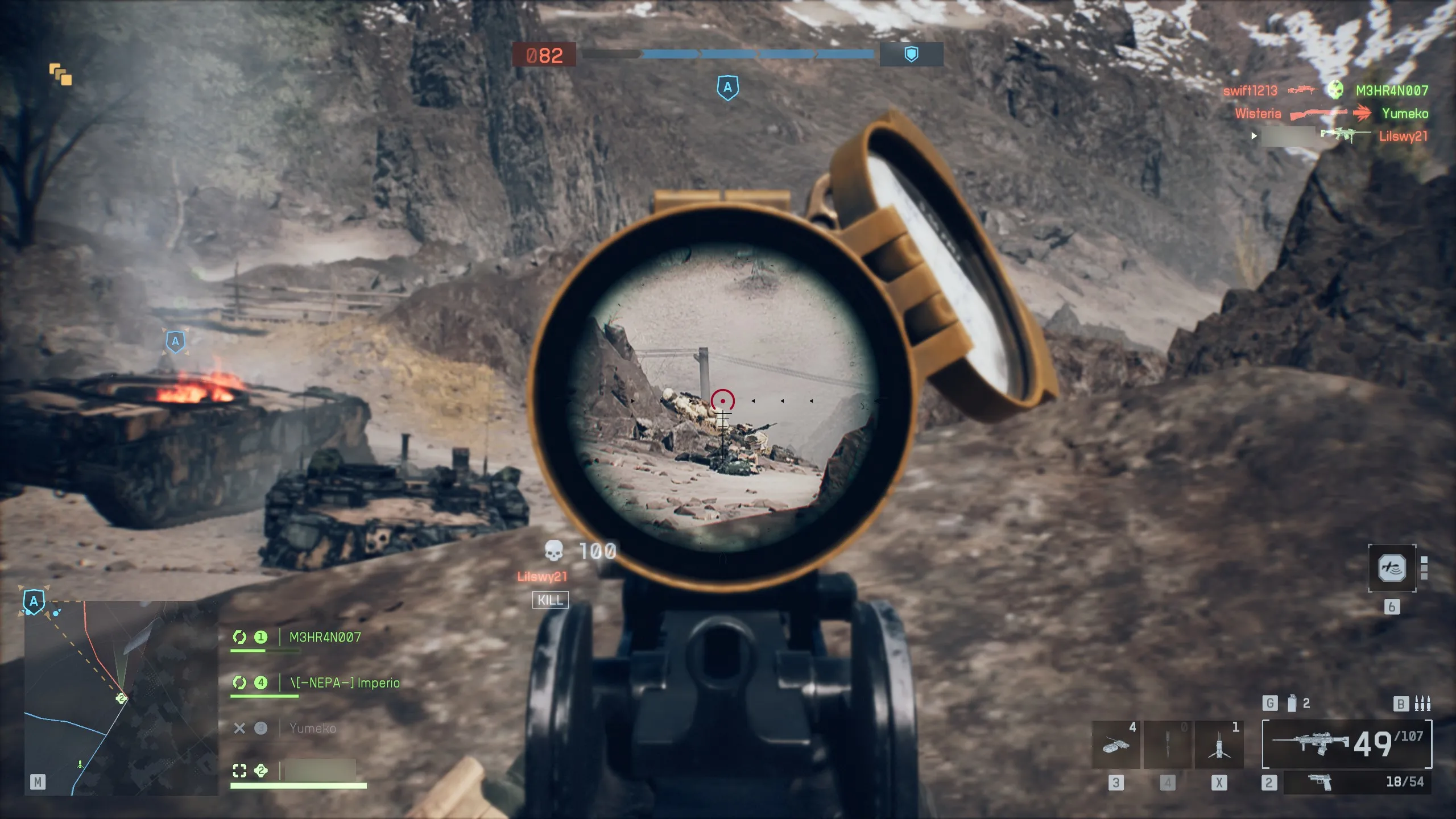
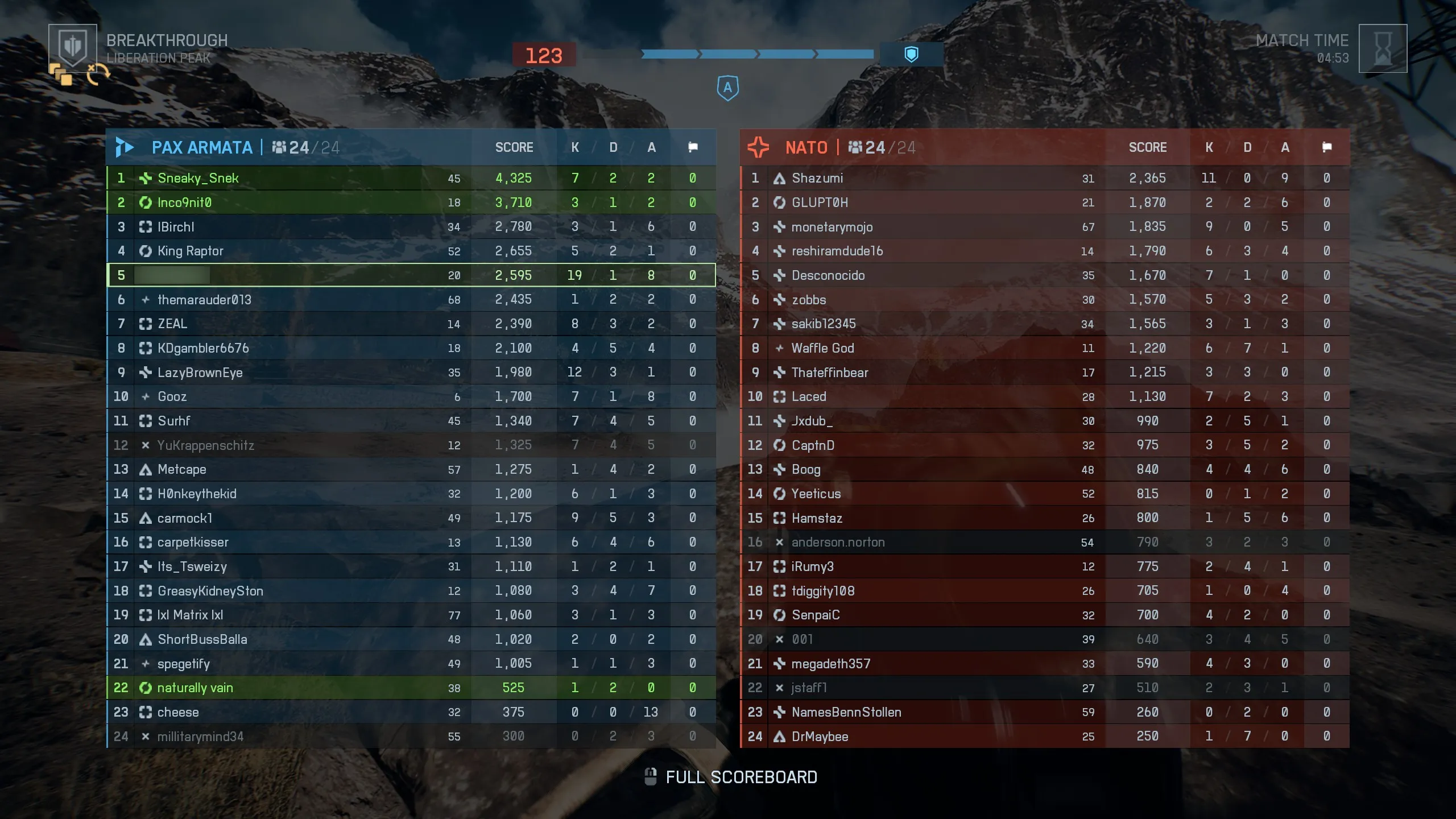

This is just one example of effective concept application. No stress, no “movement”, no sweating. Just secure the right spot and laugh your ass off as the opponents you’re farming are visibly going through their 7th smashed keyboard while tank shells, RPGs and endless bodies are being thrown at you trying to crack your one-man defence.
Closing statement
TL;DR: “Schmoovement” isn’t what defines skill expression in Battlefield. It’s about mastering the core elements of map control, positioning, and smart decision-making. Adapt, observe, and outstrategize your opponents.