Game of the Year Contenders of 2025 (So Far)
- Last updated onThis article does NOT contain spoilers.
We’re slowly starting to finish up the core contenders of this year’s best titles. As we head into the final stretch of 2025, it’s becoming clear that this year will be remembered for both its long-awaited releases and its unexpected surprises.
Top 10 games of 2025
After careful consideration of storytelling, gameplay mechanics, level design, environmental art, UX/accessibility, overall entertainment value, and much more, here’s my ranking of the most exceptional games released so far this year, with several titles still awaiting final evaluation as we head into the final quarter of 2025.
- Clair Obscur: Expedition 33
- Death Stranding 2: On the Beach
- Hollow Knight: Silksong
- Hades II
- Kingdom Come: Deliverance II
- Split Fiction
- Donkey Kong Bananza
- Blue Prince
- Dying Light: The Beast
- Silent Hill f
Highly likely things will shift around as we finish up the last quarter of 2025 prior to the Game Awards, here are expected contenders which have yet to release:
- Metroid Prime 4 (Dec. 4th)
Outstanding releases
What’s particularly interesting is how 2025 seems to be continuing the trend we’ve seen over the past few years, where dark horses come out of nowhere and further prove the fact that passion will always beat budget. Whether it’s indie studios punching well above their weight or established franchises that managed to improve upon their previous iterations, it really seems like the industry is finally starting to recognize the importance of creativity and passion over corporate greed and marketing hype. By my definition, outstanding releases are those which went far above and beyond expectations.

Clair Obscur: Expedition 33
While Clair Obscur: Expedition 33 isn’t the strictly 30-man indie powerhouse being sensationalized by the misinformed crowd, it is still nothing short of a miracle game in an era of corporate greed. It very much seems to be following in the steps of recent underdog titans like Baldur’s Gate 3.
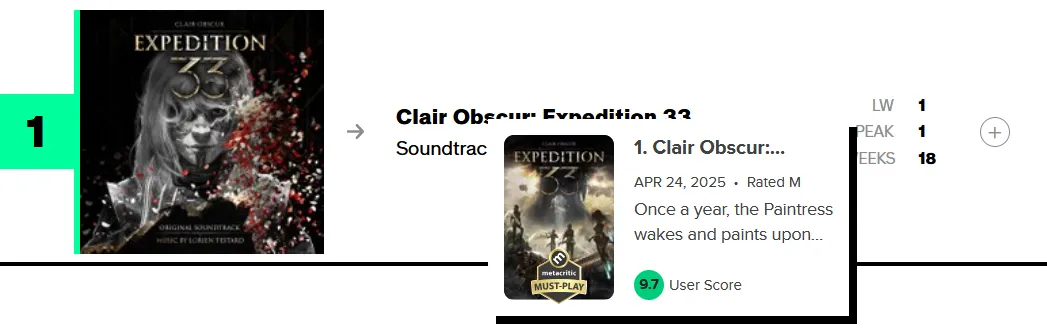
It has already gathered some pretty impressive accolades, from earning the highest Metacritic User Score in video game history, to charting #1 on Billboard Classical Albums for 18 weeks straight and counting.
But what makes Clair Obscur: Expedition 33 truly exceptional goes far beyond its commercial success. The world they’ve built is absolutely stunning, and the story hits you like a kind of truck I unfortunately can’t describe accurately enough without spoiling the game for those who haven’t played it yet.
To be quite honest, it’s difficult to make a compelling case without spoilers as someone who’s not very experienced in writing or reviewing games publicly. Instead, take it from AngryJoeShow’s spoiler-free review. Play this game.
Additively, the original soundtrack is a phenomenon in its own right. Composed by some guy from SoundCloud™ known as Lorien Testard, the score represents what might be one of the most impressive industry debuts for an otherwise unknown artist. This feat however would not be so easily achieved without the support of talent like Alice Duport-Percier, who leads the vocals in the vast majority of the 8 hour soundtrack. If you fancy listening to video game soundtracks there’s actually a good chance you’ve heard her through the Grossini Project before, covering OSTs from games like NieR: Automata.
With a live-action film in the works, and countless (hopefully) stories to be told within the world of Clair Obscur, you can be certain Expedition 33 will not be the last you hear of the newly successful Clair Obscur franchise. We are but in the infancy stage of an entirely new golden era of video game experiences.
Donkey Kong Bananza
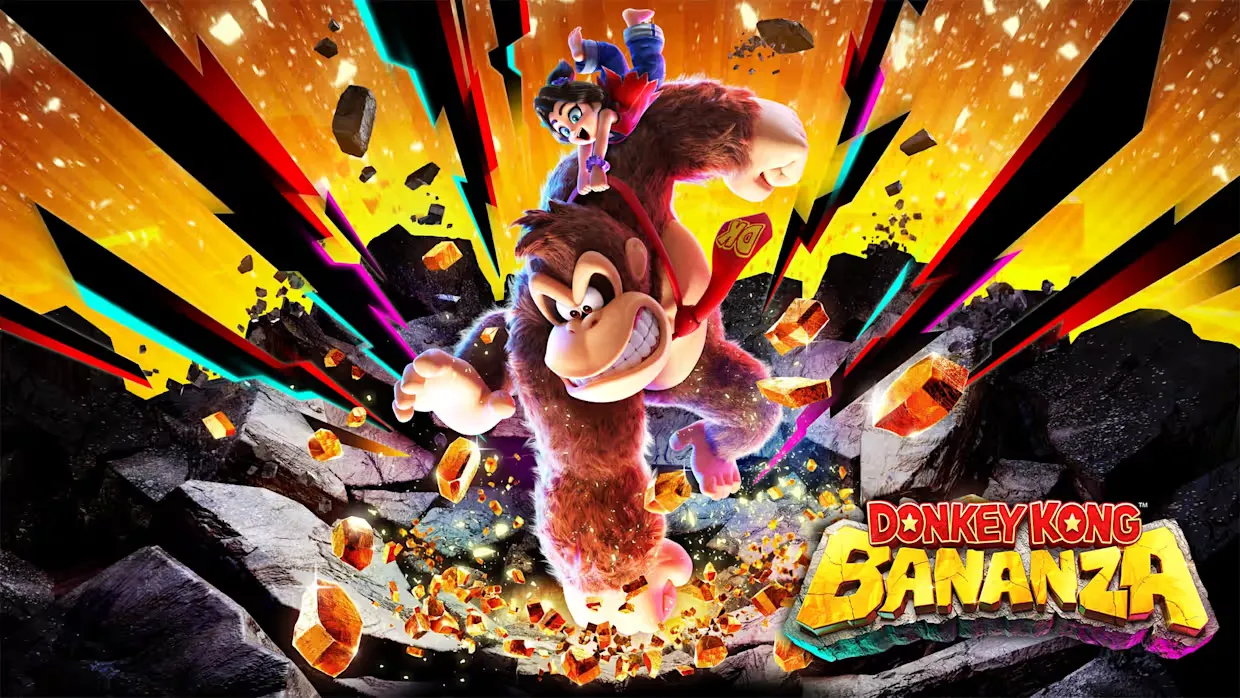
Donkey Kong Bananza represents one of the most unexpected comebacks in recent gaming history. What makes this release truly outstanding is how it completely redefined what a Donkey Kong game could be, transforming a character who had been relegated to sidekick status into the star of Nintendo’s most technically ambitious platformer to date.
The game’s achievement lies in its revolutionary approach to 3D platforming. In contrast to other games in the genre rely on carefully designed obstacle courses, Bananza flips the script entirely by making the environment itself the puzzle - for better or worse, which is also responsible for a small scoring loss.
What elevates Bananza above typical platformers is its universal appeal. Unlike the precision-focused challenges of traditional Donkey Kong Country games, this iteration welcomes players of all skill levels while still rewarding mastery. The game has achieved something rare in modern gaming: it’s both accessible enough for casual players and deep enough to sustain extended play sessions, creating an experience that genuinely brings people together rather than dividing them by skill level.
Most importantly, Bananza has accomplished what many thought impossible: it made Donkey Kong relevant again. In an era where established franchises often play it safe, Nintendo took a beloved but underutilized character and gave him a completely new lease on life. The game’s universal critical acclaim and commercial success prove that bold creative risks can still pay off in an industry increasingly dominated by safe, iterative sequels.
Split Fiction
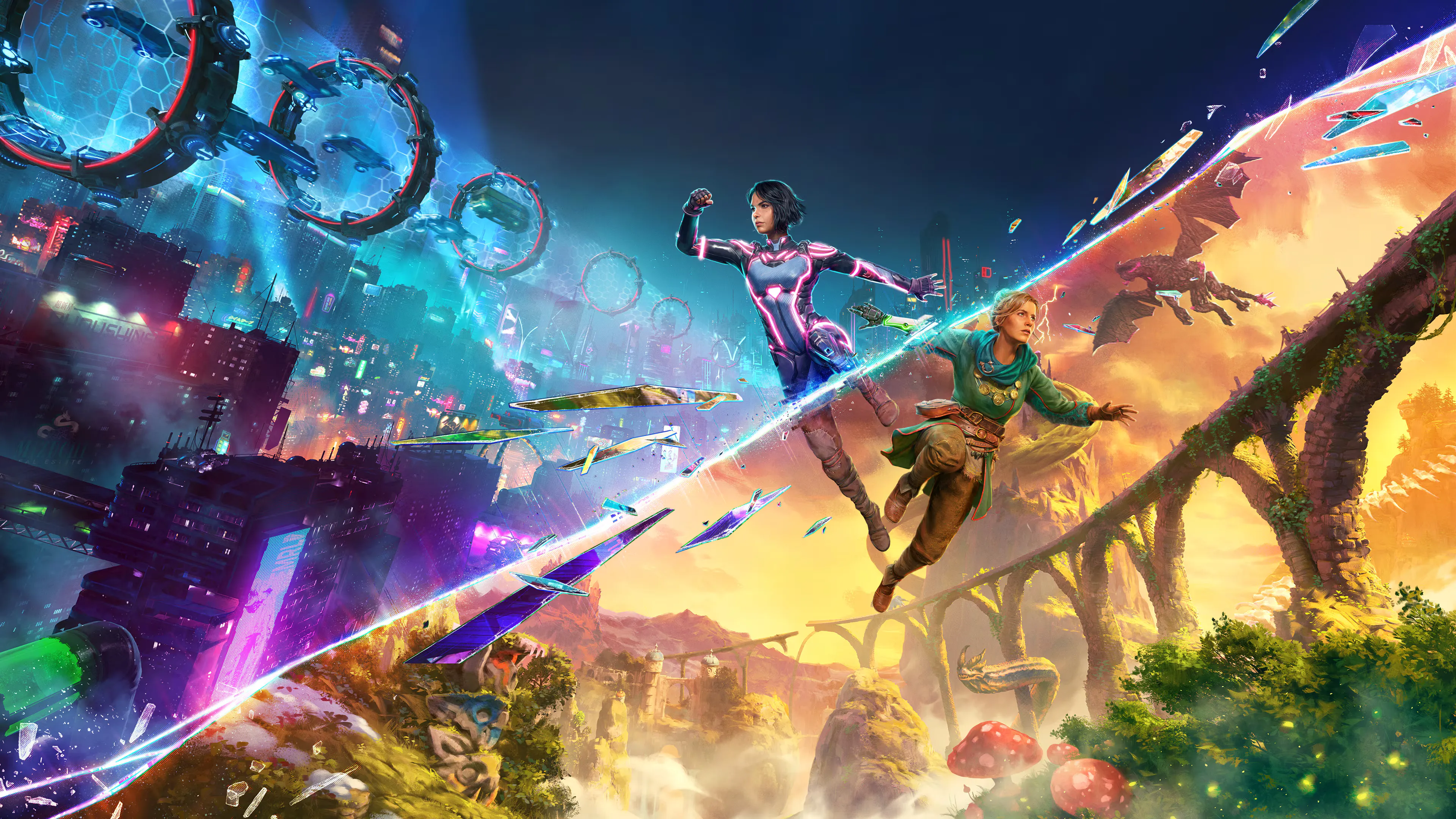
Split Fiction is impressive in its own right, and is a testament to the idea that couch co-op is still very much alive. Hazelight Studios, the studio behind the game, is no stranger to the genre; they’ve already established their ability in creating some of the most critically acclaimed co-op titles like “It Takes Two” (GOTY 2021) and “A Way Out”.
However, Split Fiction has proven to be a divisive follow-up. While critics have praised it as a “masterpiece” and “generational work”, earning a 91 Metascore, the user reception has been more mixed. The game excels in presentation and mechanical complexity, with each level introducing fresh gameplay mechanics and stunning visual design. The Friend’s Pass system, allowing one player to invite a friend for free, demonstrates Hazelight’s commitment to accessible co-op gaming.
Yet the experience falters where “It Takes Two” excelled. The narrative feels forced and predictable, with characters that lack the emotional depth of Cody and May. The co-op mechanics often devolve into repetitive “jump, grapple, slide” patterns, and there’s a noticeable imbalance between the two protagonists. Mio consistently receives more varied abilities while Zoe is frequently relegated to support roles, even in her own fantasy sequences.
Despite these flaws, Split Fiction remains a technical achievement worth experiencing for co-op enthusiasts. The final sequence is universally praised as a technical marvel, and the side stories provide genuine highlights. For experienced gamers seeking mechanical depth, it delivers where “It Takes Two” focused on accessibility.
Honourable mentions
These games are worthwhile mentions that could have easily made our main list were the competition not so fierce in 2025. In any other year, many of these titles would have been strong contenders for our top 10.
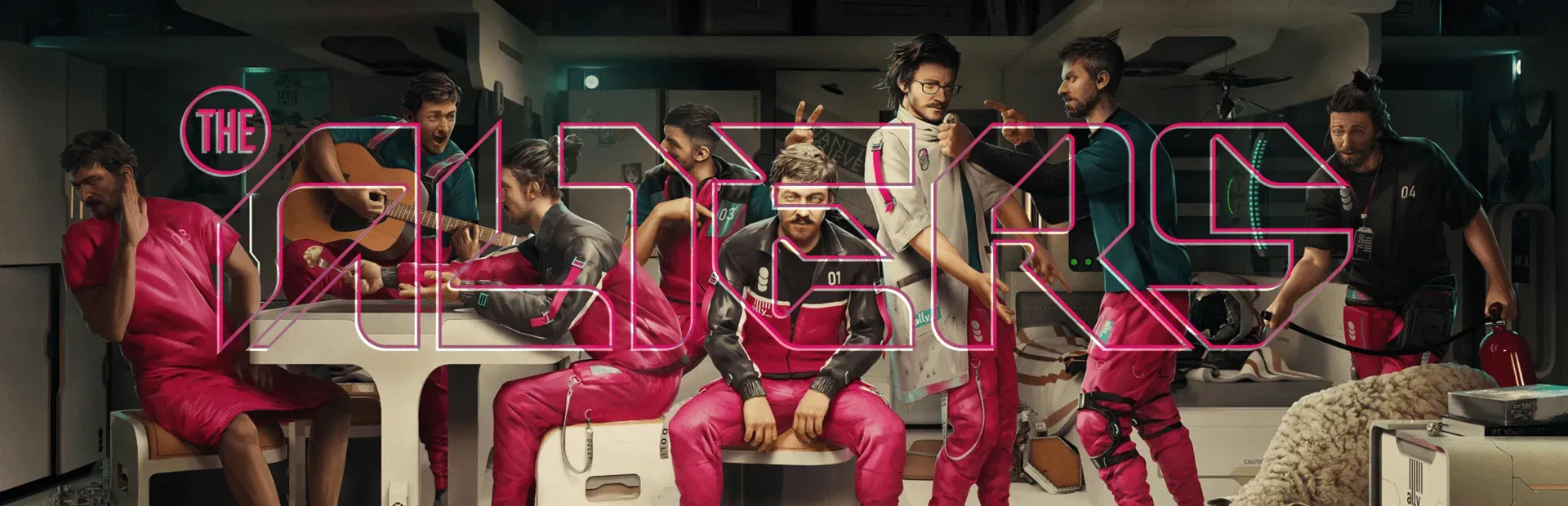
The Alters
One of the rare titles in the survival management genre amongst games like This War of Mine and Fallout Shelter. The game focuses on resource management and character survival, but elevates the experience with exceptional writing that forces players to consider the weight of difficult moral decisions.
However, The Alters has proven divisive. Many found the time-based mechanics overly demanding and anxiety-inducing. The constant pressure to optimize every decision has led many players to feel rushed rather than engaged with the story, with some even resorting to mods to slow down the time system.
Despite its issues, The Alters remains noteworthy for its ambitious storytelling approach, even if the execution doesn’t always land.
Disappointments
2025 has delivered some truly exceptional gaming experiences, however not every highly anticipated release has lived up to expectations. These disappointments represent games that had significant potential but were ultimately undermined by fundamental execution failures, technical issues, or design decisions that actively worked against player enjoyment.
Kingdom Come: Deliverance II
Kingdom Come: Deliverance II represents a textbook case of ambitious vision undermined by fundamental execution failures. Though the game’s historical authenticity and world-building show genuine passion, the core gameplay systems are so fundamentally broken that they actively work against player enjoyment.
The combat system is fundamentally broken, with phantom hits, broken targeting mechanics, and fights devolving into repetitive timing minigames. The save system actively discourages exploration by forcing players to replay large sections after deaths, while the UI is so cluttered entire tabs still require horizontal scrolling (it’s so bad there’s consistently reports of people not even being aware of the perkpoint system until getting 80+ points).
The pacing is equally problematic, with the opening hours being 90% cutscenes and exposition dumps, while later gameplay consists of tedious fetch quests and broken power scaling. Though reviews show an overall positive experience, more critical players end up highlighting the same core issues that disrupt engagement: broken combat, excessive dialogue bloat, and a general lack of respect for the player’s time.
Although the game’s historical setting and attention to detail are commendable, these strengths are often completely overshadowed by mechanical & design failures. Kingdom Come: Deliverance II has large aspirations but stumbles executing around them. Good creatives, questionable developers. This could have been a #2 or #3 contender were these flaws not present, but as it stands it belongs in the middle of the pack.
Hades II
While I don’t want to disqualify “samey-samey” sequels, there’s got to be a penalty for failing true evolution between titles. The first Hades was a roguelite masterclass offering a unique combat/mood/experience combo. Hades II is still very good, but there’s less merit in simply recycling Hades I’s successful formula when considering a Game of the Year title.
What works: More refined combat and expanded build variety. The roguelite loop remains engaging with high replayability and both underworld/overworld runs. The aesthetic continues to be fantastic, soundtrack improved, and character designs maintain high quality (with some questionable choices, like Hephaestus being a… morbidly obese guy in a wheelchair?).
What doesn’t: The story and ending are a let-down. The narrative conclusion feels rushed and predictable, with debatable justification for endgame runs. As one player noted: “It’s so frustrating to be genuinely enjoying yourself and feel the drive to finish the game just disappear as every run feels more and more pointless in the game’s world building.”
Character development falls short of the original. While Melinoë is well-designed, she doesn’t capture the same emotional connection as Zagreus. The dialogue system feels less engaging, with players feeling less compelled to read dialogue than in the first game. The ending lacks the emotional impact of the original’s.
The Verdict: While gameplay improvements make it worth playing, the story execution prevents it from reaching its predecessor’s heights. It’s a solid top 10 contender following the well-executed Hades formula, but can’t rank on the higher end due to lack of innovation and narrative shortcomings.
Monster Hunter Wilds
Monster Hunter Wilds launched as one of 2025’s most anticipated releases but quickly became a technical disaster. Seven months post-launch, the game still suffers from severe performance issues that have earned it “Mostly Negative” recent reviews on Steam, with even high-end hardware like RTX 5090s struggling with constant crashes and stuttering.
The optimization problems are so fundamental that players report having to manually delete shaders after every update just to make the game playable. Many users can’t even make it through the initial cutscene without crashes. Instead of addressing these core issues, Capcom has focused on unnecessary collaborations with Fender and Final Fantasy XIV, leading one reviewer to quip: “Maybe instead of collabing with fender and final fantasy you can collab with windows and make a functional game.”
Beyond the technical failures, Wilds represents a regression from Monster Hunter World in nearly every aspect. The low-rank campaign is described as “a huge waste of time” with boring, overly easy gameplay that feels “braindead.” The difficulty scaling is inconsistent, and the game has been criticized for lacking the depth and challenge that made previous entries compelling.
Despite strong initial sales, the community quickly abandoned Wilds due to its unplayable state. The game now has equal player counts to its predecessor despite launching with 3x the peak player count, demonstrating how technical incompetence can completely undermine even the most promising releases.
Borderlands 4
Borderlands 4 launched to immediate disaster, earning “Mostly Negative” Steam reviews within hours of release. The game is a technical mess across all platforms, with even high-end RTX 4080s and 5090s struggling to maintain 60 FPS. RTX 3070 users can’t even crack 60 FPS at 1080p, while console players report frame rates dropping to 40-45 FPS during combat.
Gearbox’s response has been equally disastrous. Randy Pitchford’s dismissive comments about “realistic expectations” and suggesting fans should accept paying $70+ for a broken product show complete disconnect from reality. The game even crashed live during Conan O’Brien’s promotional segment, perfectly encapsulating its technical state.
The game launches with a 60 FOV and no FOV slider on console - a basic accessibility feature that was present in Borderlands 3. Combined with Denuvo DRM, excessive motion blur, and poor split-screen performance, it represents a perfect storm of technical incompetence.
What makes this particularly frustrating is that underneath all the technical failures, there appears to be a genuinely good game. Multiple reviewers note that the humor lands, the gunplay feels great, and the new mechanics show real potential. But none of that matters when the game can’t stay stable long enough to enjoy it. As of current date (2025-09-24), Borderlands 4 is disqualified from my top 10 until major fixes come out.
Silent Hill f
The biggest fundamental flaw is that it’s not a Silent Hill game. Sure, it shares a similar theme of a symbolic story built on top of a protagonist’s unstable psyche - but beyond that there’s quite literally nothing tying Silent Hill f to the original franchise as a whole.
The game delivers an experience that feels more like a generic action-horror title with the Silent Hill name slapped on for brand recognition. The clunky souls-like combat actively works against the tension and atmosphere the series is known for, with players spending more time fighting spongy enemies than experiencing genuine horror. The dodging mechanics and stamina system feel completely out of place in a survival horror context, undermining the psychological unease that should define the experience.
The shrine sections implement tedious and boring maze-like puzzles that actively kill exploration. These sections feel like padding rather than meaningful gameplay, pulling players away from the environmental storytelling that should be the game’s strength. Additionally, several mechanics feel completely inconsequential - the insanity system poses no real challenge to the point of being forgettable, while weapon durability feels tacked on without purpose, only becoming relevant during the end-game enemy spam.
The final act throws too many enemies at the player in rapid succession, abandoning the “less is more” principle that defines effective horror. The combat is passable at best, and it’s not engaging enough to sustain the repetitive encounters, leading to frustration rather than tension.
Point being, this shouldn’t have been called Silent Hill to begin with.
Battlefield 6
This is likely to be an article of its own, but although Battlefield 6 appears to be starting a return to form with this latest title, I cannot consider including it within the top 10 due to its catastrophic campaign alone - without even addressing Multiplayer’s shortcomings. From development hell to technical failures and numerous other issues, there’s simply no way this type of release can compete with the roster we’ve had this year, or really any year for that matter.
To be clear, the Multiplayer is slowly beginning to resemble what fans enjoyed from the earlier titles of the golden era, but not only is it not quite there yet; the Campaign and Battle Royale modes of BF6 are simply forgettable at best. I do expect some interesting content to emerge from Portal’s User-Generated Content, but its full potential will have to wait, and also isn’t something you can expect to carry much weight in Game of the Year consideration at release.
Worth keeping an eye out
Released or yet-to-be-released games that while not considered contenders, are most definitely still worth a recommendation:
- Peak
- The First Berserker: Khazan
- Cronos: The New Dawn
- Dune: Awakening
- Gears of War: Reloaded
- The Rogue Prince of Persia
- The Elder Scrolls 4: Oblivion Remastered
- Syberia Remastered (Nov. 6th)